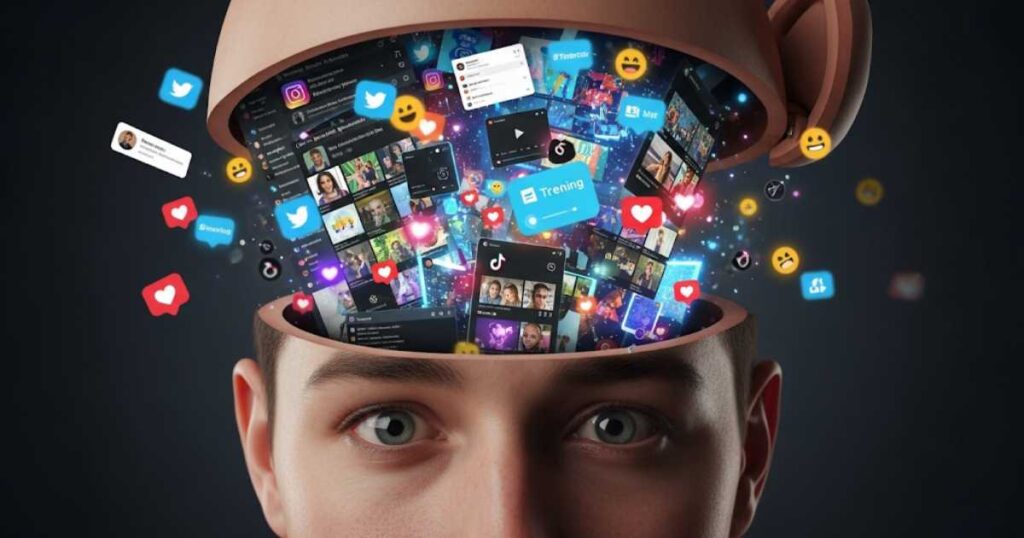
We live in a strange era where people have never been more connected, yet relationships have never felt more fragile. Almost everyone today walks around with the quiet belief that there is always someone better out there, a more attractive match, a more exciting personality, someone more aligned, more perfect, more “my type.”
And this belief doesn’t come from real life; it comes from the endless digital world we carry in our pockets. It’s the subtle influence of seeing too many faces, too many choices, too many polished versions of people who seem easier, happier, or more compatible than the person we’re actually getting to know.
What most people don’t realise is that our brains were not designed to handle this constant stream of comparison and possibility. Social media and dating apps create a sense of limitless opportunity. Whenever something in a relationship feels slightly inconvenient or imperfect, the mind immediately whispers, “Maybe you could do better.”
This is not intuition, it’s conditioning.
When we scroll through hundreds of profiles or watch couples online who carefully curate every smiling moment, our brain begins to overvalue novelty and undervalue commitment.
It starts expecting relationships to be smooth all the time, forgetting that human connections have always been messy, complicated, and full of small flaws that require patience.
The science behind this shift is surprisingly simple. Platforms are built to trigger dopamine, the brain chemical tied to anticipation and reward. Every notification, every like, every attractive stranger, every “new” possibility gives us a small hit of dopamine.
Over time, our brains start craving that feeling of “the next thing” instead of appreciating what we already have. This creates restlessness. It makes people lose interest faster. It makes them think emotional effort is unnecessary because there are endless replacements waiting online.
But dopamine is about excitement, not happiness. It pushes us to chase something new, not to build something meaningful.
There’s also the psychological effect of comparison. When you see curated versions of relationships, perfectly posed vacations, ideal partners, grand gestures, flawless moments, your brain quietly evaluates your own connection and decides it’s lacking.
You might be in a perfectly healthy relationship, but compared to the filtered fantasy you’re constantly exposed to, it suddenly feels unremarkable. This is how many people end up leaving something good because they imagine something great exists elsewhere. But what they’re chasing isn’t reality; it’s an illusion created by selective presentation.
Another problem is how easily people confuse discomfort with incompatibility. In the past, small disagreements or emotional misunderstandings were seen as normal parts of any relationship.
Today, the moment someone feels even a slight inconvenience, maybe the partner is stressed, maybe they’re distant for a day, maybe they’re not perfect at communicating, the instinct is to pull away. We have internalised the idea that relationships should be easy all the time, and if they’re not, something must be wrong.
But a real connection was never supposed to be effortless. It grows through understanding, compromise, and working through the uncomfortable moments rather than escaping them.
The truth is that love is built on repetition, consistency, and choosing someone even when things are not ideal. This is where long-term bonding chemicals like oxytocin come in, the hormone responsible for trust and emotional safety. It doesn’t come from endless options.
It comes from time, vulnerability, and shared experiences. It forms when you stay instead of running, when you talk instead of disconnecting, when you give someone the chance to be human rather than expecting perfection.
People think they’re searching for the perfect partner, but what they’re really searching for is a feeling, the excitement of novelty, the thrill of potential. That feeling fades with every person, no matter how amazing they are. Because the problem is not the partner; it’s the overstimulated brain constantly trained to want more.
And the saddest part is that this mindset makes many people overlook someone who truly cares about them. Someone who shows up. Someone who might be imperfect but genuine.
The world is full of people who keep searching for “better” and end up with nothing lasting because they never gave anything enough time to become meaningful.
At some point, we all face a choice: keep chasing the illusion of limitless options, or learn to appreciate the depth that only comes from choosing one person and building something real. Modern love isn’t failing because people are wrong for each other. It’s failing because people quit too fast, expect too much, and confuse dopamine with compatibility.
Love was never about finding someone perfect. It has always been about choosing someone real, and choosing them again and again, long after the excitement settles.